Services

Tank & Fuel Services

We offer a complete, comprehensive program of testing, maintenance, and documentation required to keep your systems up and running.

Step 1

Sampling and Formulating a Treatment Plan

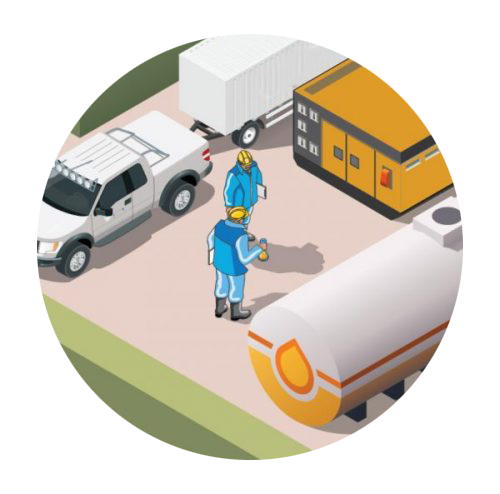
For every customer, the first step in our process involves sampling and testing your fuel supply, to include incoming fuel from the supplier before the fuel drop to in-tank storage, day tank and fuel consumption. This allows us to tailor a custom solution that addresses whatever specific challenges you may face. Further, sampling and testing allows us to establish a benchmark against which we, and you, can measure our success.

Our testing service includes fuel sampling and field analysis. Unlike our competition, we can test your fuel on-site and provide you with the information you need on the spot. Once we’ve completed this first step, we can move forward with a treatment plan designed specifically for you.
Step 2

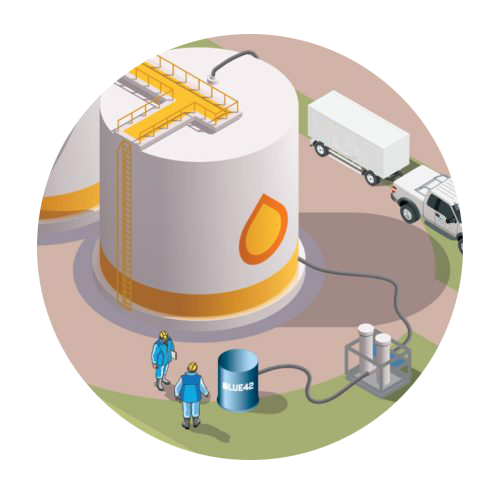
Cleaning the Tank

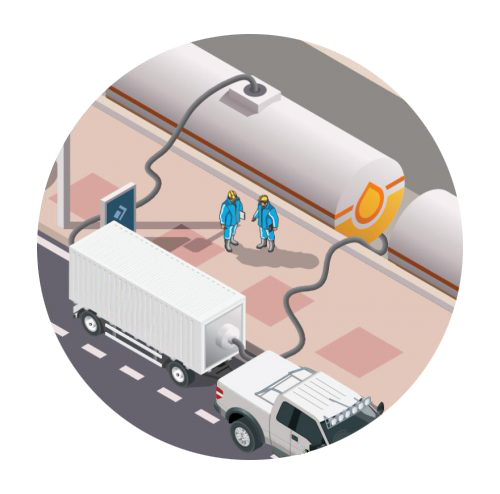
Our tank and fuel cleaning services begin with your tank. Filling a dirty tank with clean fuel may make sense to our competitors, but it doesn’t make sense to us. At Accredited Fuel Solutions, we make sure your entire fuel supply chain – including your storage tank – is contributing to your success.

We begin the tank cleaning process by removing accumulated waste byproducts that have collected at the bottom of your storage tank, ensuring that once the fuel is cleaned it stays that way as long as possible.

Step 3

Polishing the Fuel

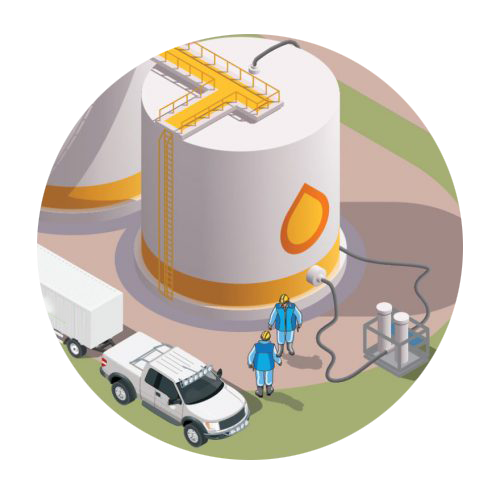
Once the storage tank is free of accumulated waste, we will begin running the fuel through a purification system matched to your needs. Our process of advanced step-down filtration removes additional particulate contamination and moisture accumulation that naturally occur over time. Upon completion, the fuel in your tank will be processed and ready for consumption, meeting the engine manufacturers’ standards and specifications

Note that this part of our turnkey service is available to you on an ongoing basis since stored fuel contaminates naturally and must be maintained. Our component filters and engineered filter systems are available for purchase or lease. We even offer fuel system instrumentation and monitoring components for dirt particle and moisture control.

Step 4

Treating the Fuel

Moving forward with a clean tank and polished fuel, we treat the diesel in your tank with proprietary additive blends designed to maximize the amount of time you can expect your diesel stores to comply with industry standards. Accredited Fuel Solutions’ Blue42® additive is our flagship product, and we take great pride in every application. Ongoing engineered systems are also available for aboveground, underground, and sub-base tank installations. See our full line of AFS FFS systems for more information about keeping your diesel fit for purpose.

Step 5

Maintaining the Fuel

For customers who have committed significant capital toward owning and operating the latest generation of power equipment, it makes sense to read the fine print on warranty protections and follow up with documented validation of fuel quality. Accredited Fuel Solutions meets this need through routine follow-up testing and the provision of forensic data that documents your organization’s compliance with warranty requirements for Tier 4 diesel equipment.

The ongoing monitoring and maintenance of your fuel stores is where Accredited Fuel Solutions stands alone. Our service defines proactivity for organizations that cannot afford down time, and stands in stark contrast to the offerings of our competitors who merely react to problems after the fact. Accredited Fuel Solutions doesn’t just fix your fuel problems…we help you avoid them altogether

Contact us to learn more about how we can help you maintain your entire fuel system in line with industry standards and engine manufacturer warranty requirements.

Prepare the fuel path. Verify the system. Support reliable operation.

PREPARE THE FUEL PATH

Fuel Line Flushing, Purging & Priming

A complete fuel-management plan begins before the first startup. AFS coordinates flushing, purging, and priming of the fuel lines to prepare the complete delivery path for commissioning.

  • Fuel lines flushed to the project’s required procedure
  • Lines purged and primed before commissioning and startup
  • Scope coordinated with installation and commissioning teams

The work connects fuel storage, offloading, distribution, and generator systems as part of the agreed commissioning plan.

BRING THE SYSTEM ONLINE

Commissioning & Startup Support

AFS provides complete commissioning and startup support for the integrated fuel system. Equipment checks, control-sequence verification, alarm testing, and interface coordination help bring the installation into reliable operation.

  • Equipment and control-sequence checks
  • Level-alarm, interlock, and interface verification
  • BMS / SCADA coordination where specified
  • Startup support and project documentation

The final scope is established around the installed system and the project’s operating requirements.

KEEP THE PLAN WORKING

Ongoing Fuel Management

Carry the commissioning baseline forward with ongoing fuel service, treatment, cleaning, and verification. AFS coordinates a maintenance plan around fuel condition, contamination trends, and the facility’s operating requirements.

  • Routine bulk-storage and generator-tank cleaning
  • Treatment for stability, microbial control, and water dispersion where indicated
  • Scheduled filtration cycles based on contamination trends
  • Periodic third-party laboratory analysis against ASTM D975 requirements and ISO 4406 cleanliness targets
  • Service reports for facility records, audits, and generator-manufacturer requirements
  • Emergency response for contamination events and generator-fuel problems

Know Your Data: Knowing how to test fuel and interpret the results is as crucial as regular testing. Documented follow-up helps protect generator assets and reduce the risk of unplanned downtime.

Mission-critical facility support

Fuel analysis verifies fuel properties and cleanliness. Service planning and documentation can also support applicable NFPA 30 storage-and-handling requirements, NFPA 110 emergency/standby-power maintenance requirements, and local AHJ requirements.

Plan Your Flushing & Startup Scope

Talk with AFS about the installation, schedule, and operational requirements for your fuel system.

Fuel Quality Management — From Conception to Consumption™